Showing posts with label historical fiction. Show all posts

Monday, February 23, 2026

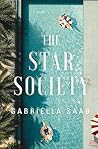
Review: The Star Society

The Star Society The Star Society by Gabriella Saab
My rating: 3 of 5 stars

I received this book for free, this does not affect my opinion of the book or the content of my review 

That was before she learned what war is. What it does. War takes and takes and so rarely returns. 

The Star Society was the story of two sisters who lost each other in the survival of WW ll only to be put in an impossible situation as they tried to regain their relationship. We're first introduced to Ada in 1943 New York City as she arrives in the United States after escaping from the Netherlands. We get a vague idea of why she left her homeland before the story jumps to 1946 Hollywood and Ada's on the way to becoming a famous actress. If you know your history, this is the time period where the Red Scare, the US government ramping up their searching out and condemning Communists, is happening, which brings in Ingrid, Ada's twin sister that she never knew the fate of. 

“None of this will settle down as easily as I hoped, will it?”

Ingrid left the Netherlands before Ada with her fiance and ended up in Washington D.C., working for the government. When she recognizes Ada from a picture being passed around as the next target to investigate in Hollywood, she jumps at the chance to lead it. When the sisters reunite there's some distrust, Ingrid not knowing if Ada is a Communist, Ada wondering why Ingrid never wrote to her to tell her she was alive but the bond between the two is still there. As the story dances around in Hollywood we get some actors and celebrities mentioned and brought into the picture from the time and as Ingrid's investigation gets deeper and twisted as some players have their own agenda, we get a look at some historical re-imaginings/enactments of what trials and commissions were like for the people being branded Communists at this time. 

“All we can do is defend ourselves, even when it isn't enough.” 

Along with the sisters relationship being entangled with the Red Scare plot, there's some past players hiding in the wings as Ada finds the strength to try and get a case worked up on an SS officer from her past. The time jumps in the beginning felt a little confusing with the not being settled into the who's and what's of the characters and their relationships; keeping the past purposefully clouded for shock impact had me struggling with some aspects. It's a little over halfway into the story when the timeline finally stayed in the present (1946-7) and I felt settled into the story with following along with two characters who have entwined stories. If you're looking for a little historical fiction with WWII that leads into a Red Scare Hollywood, some mystery with past events creeping up, a little bit of romance, and a sister's relationship that goes through it, this had all those elements.
Thursday, November 6, 2025

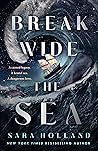
Review: Break Wide the Sea

Break Wide the Sea Break Wide the Sea by Sara Holland
My rating: 3 of 5 stars

I received this book for free, this does not affect my opinion of the book or the content of my review 

Don’t move too fast. Don’t touch anyone. Ignore the smell of blood. 

A young adult mash of historical fantasy, romance, and magic, with a cover that will surely grab those among us that haven't gotten past our ship phases and still have sea shanty songs on our feeds. Break Wide the Sea takes place in a fantasy world where finfolk (mermaid and fae mix) exist and are close to going to war with the humans who hunt Livyati (magical whales). It's a historical fantasy 1800s whaling world where told all from her point-of-view, eighteen year old Annie is now the head of her family's whaling company. Her parent's died when she was younger, finfolk attacked them when they were out whaling and only she, and two other boys August, and Silas, survived. This was nine years ago and bonds the three together, oh yes, we have a love triangle, but it's a weak one. Annie's family was cursed eons ago, she's turning into a Siren, her turning brought on by Heartbreak but holds it off by getting comfort from her fiancé August. When they were attacked by the finfolk it was revealed that Silas was half-human, half-finfolk, but Annie can't reveal him as he also knows she's cursed. Six years ago, Silas sent Annie a shell that holds a memory showing her August plans on killing her eventually and taking over the company. Annie's trying to fend off a curse, take care of her two younger siblings, and figure out who she can trust. 

“Dissolve the company,” he whispers. “End whaling forever.” 

I think this will be more for historical fantasy readers, the whaling world and finfolk elements captured my attention the most, but maybe that's the sea shanties ringing in my ears. The romance felt fairly weak to me, it's YA so there was kissing and groping, with a completely off-screen bedroom scene later on but more importantly, there wasn't much emotion to feel between Annie and August. For plot purposes, it's clear it wants to remain a mystery to put tension between Annie, August, and Silas, if Annie can trust August or Silas, but, it's all pretty obvious. Annie's pov felt wishy-washy a lot of the time and that made for drawn out melodrama because as it's all from her, the reader can't escape. 

Something malevolent is happening on the Heralder. My family’s ship, I think with a surge of possessive anger. 

A lot of the story takes place on the sea, which I enjoyed and the messaging is pretty clear on this, humans have to respect and work with nature or feel it's wrath. I almost felt like Annie's younger sister Lydia stole the show from her, she was a stronger character and I wish we could have felt that decisiveness from Annie. Silas intrigued, as he's mostly a mystery to Annie, he remained for most of the story the same to me as the reader. I'm not usually a fan of love triangles but as the relationship didn't feel strong to me between Annie and August (you'll swim with the whales to deeper depths), well, I was just waiting for her to open her eyes more to Silas. 

A monstrous queen wants me for unknown purposes. 

As Annie fights to figure out who to trust, August claiming to help her build up her whaling business or Silas who claims August wants to kill her and tells her he can bring her to the finfolk to cure her curse, it all builds to a now you're going learn ending when the finfolk and their Queen show up. This does end on a cliffhanger, we see what happens to the characters but they are set on new journeys as the building war between the finfolk and whalers isn't over, and a new one has begun between Annie, August, and Silas.

Sunday, April 27, 2025

Review: The Keeper of Lost Art

The Keeper of Lost Art The Keeper of Lost Art by Laura Morelli
My rating: 3 of 5 stars

3.5 stars 

I received this book for free, this does not affect my opinion of the book or the content of my review 

“That's the power of art,” the maestra adds. “It can tell a story. An official story. But each one of you might also see your own story in it. At a minimum, you might find hope, even when there is darkness.” 

The Keeper of Lost Art was a historical fiction story told from a twelve year old girl's eyes in Italy during World War II. It's a coming of age character story inside a dark historical time period. It's 1942 Italy and Stella has been sent to the countryside by her mother to her uncle and aunt's, in hopes it will be safer for her. Stella has never met them but with two girl cousins around her age, even with an aunt that seems to dislike her, she's trying to fit it. Her uncle was the driver for the owners of the villa but with the English owners escaping to Switzerland, Stella's family is left in charge. It makes her uncle's decision to agree to hide paintings from the Uffizi Galleries even more brave and dangerous. As the war rages on, even the countryside begins to feel it's effects as German soldiers and then all nationalities descend on their villa, all while Stella gets a front row seat to the vagaries of human nature and the importance and meaning of cultural art. 

All they want is an end to the interminable suffering, a solution that will bring their husbands and sons and fathers back to them. And they just want to go home. 

Having the story told from a twelve year old girl's eyes, who ends up fifteen by the end of the story, added a naiveté that worked to allow the author to add historical explanations and emotional building while keeping the gritty and darkest tones at bay. The aunt knows the threat of violence specific to Stella and her cousins but Stella doesn't quite comprehend it, as she ages she emotionally grows and it starts to creep into her conscious but the tone and direction of the story was more about how works of art, cultural touchstones, can inspire and give people reasons to hope during dark times. The works hidden at the villa focus on Botticellis', specifically his Primavera. When Stella befriends, Sandro, a refugee boy her age, his interest in art builds her own and we get looks at how much art can mean to people. 

“You mean we risk our lives to save the paintings,” Sandro says. 
Signor Fasola stands silent for a long time. “Yes. That is the reality of it. But we can't let them take or destroy whatever they want.” 
“But...why us?” Sandro asks. 
“Why not us?” Signor Fasola says, the twin frames of his glasses reflecting the glowing light. “If we don't take some action---any one of us---then who will?” 

I thought the middle and latter half dragged a bit as the story began to, not quite wax poetic, but indulge in the emotional hope and uplifting of cultural art. As it's told from Stella, there's allowance for a less outwardly scope but these people were starving and living in threat from all avenues, so the continued art talk started to drag-on. Even though Stella and her specific family were fictional, the historical events and villas in the Italian countryside hiding art to protect it from war, were all true. Each chapter started with a fictional entry from Botticelli's diary and an American Captain from the famed Monuments Men and Women division that worked to save and recover cultural artifacts. This was a good additive as Botticelli's musings from the 1400s echoed the Captain's from the 1940s, showing shared importance and circular problems humans create for themselves. 

A long chain of people who cared enough to risk their lives, to devote their whole careers, to preserving the things that matter. Artist or no artist. 

You'll begin to care for Stella and the characters that start to make-up her family, part of the dragging issues in the latter half I discussed involve abandoning these human characters in favor of the art, and realize that, yes, saving the Humanities, is extremely important. The ending delivered sadness and hope, with Stella taking what she learned during those three years and having the courage to chase those wants and dreams.

Monday, February 24, 2025

Review: Gate to Kagoshima

Gate to Kagoshima Gate to Kagoshima by Poppy Kuroki
My rating: 1 of 5 stars

1.5 stars 

I received this book for free, this does not affect my opinion of the book or the content of my review 

She was here on a mission: to find her third-great-grandfather’s history. 

Gate to Kagoshima was a time travel historical fiction feeling, through internal observation and introspection of 1877 cultural Kagoshima Japan, with a romantic element story. Isla grew up in Scotland but has ancestral roots in Japan, roots that she feels a pull to search for more information about. When she has some free time from her study aboard courses in Tokyo, she takes a trip to Kagoshima. Armed with some vague knowledge that her third great grandfather was one of the famed Samurai of the Satsuma Rebellion, she travels there to try and research more about him. Only she gets more than she bargained for when she gets lost exploring a shrine and goes from 2005 to 1877. 

Isla tried to remind herself that Takamori Saigō died one hundred and twenty-eight years ago, along with the rest of the last samurai, but knowing this didn’t make the man she was staring at seem either a fluke or trick. 

The first half of this was somewhat slow going, it leaned heavily into the historical fiction aspects. I enjoyed the mixture of real life historical figures and events with fictional characters but, as this was told mostly from Isla's point-of-view, with Maeda Keiichirō having a good amount of pov passages and then one or two from other secondary characters, most of the story was told from inside her head, relaying her thoughts about what she was seeing. This was more observational introspection, with not much dialogue (we do get more in the second half). I like inclusion of historical elements but this felt like focusing on the research for spouting facts purpose; it was a story about setting instead of characters, readers who came for a more character journey would struggle with this first half.

History was unfolding before her eyes. 

The story did get going with the time travel right away, Isla was in 1877 by 20% in and she met Keiichirō right away. He gets tasked with sheltering her and watching her as they think she could be a spy. After Isla integrates herself into the community life a bit, the second half did pick up some steam with the historical march and fighting at Kumamoto Castle. There we get some jarring, for what the tone of the story felt like previously, gory scenes of death and fighting and Isla worrying over Keiichirō. The romance wasn't really romancing for me as it wasn't too focused on in the first half and then the second half just kind of tries to force the reader that they feel this incredible love for each other. In his own words Keiichirō summed it up for me: They had never touched unless by accident, or talked about deeply personal things, or even stared into each other’s eyes. And yet Keiichirō knew his life would be less if Isla wasn’t there, and her absence would be like draining all the colour from the world. He just knew. 
You're just supposed to know that they have this intense love, because there wasn't any development for it. 

The rain pelted the hillside, the torii gate waiting on top. 

The latter second half had some awkward time jumps, feeling like jumbled scenes together, an open-door scene that also did not feel like it fit at all, and some reveals. One of the reveals involved Keiichirō's sister and it honestly was so incredibly not needed and because of the time period I'm living in right now, it felt pointed jammed in a way that had my hackles raising all the way up. I'll put what it was in spoiler tags 
****SPOILER***

Years ago when Keiichirō's dad found his sister pregnant, she told him that she was raped. The dad slices the rapist's throat in his sleep, which makes the killing not honorable and so as a samurai, the dad commits seppuku, kills himself. Towards the end it's found out that the sister lied about the rape to hide her promiscuity and there's some relaying at how this lying destroys so many people. Just personally not in the mood for this kind of messaging when we know the percentages of fake rape accusations and prevalence of rape 
****SPOILER****

If this doesn't raise your hackles, you'd probably not have the bad taste in your mouth like I did towards the end. The ending stayed true to the real historical event and the romance gave a Knight in Shining Armour by Jude Deveraux-ish end. The first half was slow paced but could interest observational historical fiction readers but the second half and ending was a jumbled mess of pace, tone, and scenes.

Saturday, November 16, 2024

Review: Christmas with the Queen

Christmas with the Queen Christmas with the Queen by Hazel Gaynor
My rating: 3 of 5 stars

2.5 stars 

I received this book for free, this does not affect my opinion of the book or the content of my review 

Jack had always been there, and yet, our timing had always been wrong. 

Taking place in 1952 England, Christmas with the Queen was the story of Olive, a single mother aspiring to work her way up to reporter in the BBC and Jack, an American who after WWII, left the Navy and stayed in London. The story starts off with a point-of-view from a young Queen Elizabeth II as she gets ready to spend her first Christmas in charge at Sandringham. There's a handful of povs from the Queen throughout the story and while I can see the attraction of having a real historical figure help ground a historical fiction story in time, it felt a little off to me to read a first person narrative from such a known figure to current generations. 

The two main povs are from Olive and Jack, switching off and on. Readers learn early on that Olive is lying about losing her husband in the war, she was never married but the times call for the lie. She lives at home with her parents helping her care for her daughter Lucy. Jack comes onto the pages happy with getting an opportunity to work in the royal kitchens at Sandringham, an opportunity his wife pushed him to take. Tragedy strikes early though and Jack finds himself a widow and reluctantly still taking the royal chef job. With a little luck and ambition, Olive gets the opportunity to cover the Christmas celebrations at Sandringham for the BBC and there she begins a yearly friendship with the queen and runs into Jack. We then get some flashback povs and learn these two knew each other seven years ago and that Olive is shaken up when she sees him again. 

If you're looking for a story with holiday feels, this has that as most of the story takes place in the month December, jumping to the month, spanning five years as Olive and Jack find themselves separated by circumstance, Olive trying to get promoted at the BBC, Jack busy as a chef and working towards his goal of opening his own restaurant, until they come together by luck each year at Sandringham and a royal Christmas tour. 

Around 35% a secret Olive is hiding (it's pretty obvious what it is) gets revealed to readers and I can see quite a few getting frustrated and irritated with Olive's inability and weakness at telling the person who needs to know. The authors tried to make it understandable why she delays so much, but, especially towards the end, she really had no excuse, and the relationship she tries to get going with a secondary character really did nothing for the story, for me anyway. This was more historical fiction with slice of life, the romance between Olive and Jack doesn't really get going until the last 20% and then we get a, very understandable, third act breakup with Jack having to get over his anger at Olive. 

A softer, there is some grief emotion with Jack learning to live with widowhood and Olive dealing with sexism in society and work, historical fiction that December hops for five years while Olive and Jack's lives bring them apart and together, with appearances by Queen Elizabeth II and some Easter egg characters from the authors' other books.

Saturday, July 20, 2024

Review: They Dream in Gold

They Dream in Gold They Dream in Gold by Mai Sennaar
My rating: 5 of 5 stars

I received this book for free, this does not affect my opinion of the book or the content of my review

She knew nothing of the place in the world she and her mother came from, and as a child she believed that they had come from sound.

They Dream of Gold was a story of how the changing tides of life pull and push us while we're trying to set our feet firmly in the ground. As a debut, this is one of the best I've ever read, the flow from one point-of-view, timeline, and setting to another was tightly held together by the connections between the characters. This type of story could have so easily got away and fell apart but the author's writing style and tone keeps the traveling sands feel discussed in the author's note. I would consider Bonnie our main character and touchstone as she blows into other characters' lives and as she's with them, readers then get tangents into those character lives.

When we enter into Bonnie's life, it's 1969 Switzerland and she's heavily pregnant. Staying at her mother-in-law's home, the household is tense and stressed that they haven't heard from Mansour, Bonnie's husband. He's a musician who's been out on tour and when a radio report comes on that the women fear could hold the answer, Bonnie knows it's time to figure out what happened to Mansour. The story then branches out, giving us Bonnie's childhood, her mother couldn't take care of her when she was younger, so she left Paris to stay with her grandmother in Brooklyn, and then as each character, Bonnie's mother Claudine, Mama Eva, and the other two women staying in Mama Eva's home, Marie and Sokhna, along with Mansour and friends and colleagues Mansour makes along his way and how Bonnie and Mansour met, we flow into each characters' pov and visit their lives at certain times in their history. From 1969 Switzerland, 1949 Senegal, 1927 Alabama, and other times and places, the story manages to give intimate insights into what happened to these characters and how that has shaped and molded them in the 1969 present.

This structure sounds zig zaggy, but I promise it works, we never info dump stay with one character, it's more of a constant flowing around as the present search for Mansour is the central plot line for bringing in and connecting all these characters. As Mansour is a musician and that is a main part of what brought him and Bonnie together, it's all around in the story and what I'd keep in mind if you're more of a linear reader to help you get into the flow of this. There were moments of quiet devastation, fierce love, hope, and strength that will keep you thinking about these characters for a long time. Historical events were in the background and forefront at times to ground the reader in the time and place of the character pov you're reading at the time, adding more layers to the characters. This was an amazing story on how other's not only affect our lives as they come into and leave it, but how we carry and pass on, whether familial, friendship, or romantic, those little grains of emotional experiences from one generation to another. There was so much to experience and feel in this, that I can't recommend it enough.

View all my reviews

Tuesday, June 4, 2024

Review: Bright I Burn

Bright I Burn Bright I Burn by Molly Aitken
My rating: 5 of 5 stars

I received this book for free, this does not affect my opinion of the book or the content of my review 

Now, I am my own creation, and it’s far too late to change me. 

Told in a lyrical and bard style, Bright I Burn breathes historical fiction life into the first recorded person condemned for witchcraft in Ireland, Alice Kyteler. The story brings readers in when Alice is nine years old in 1279 Kilkenny, Ireland. At this age, Alice learns an important truth of how woman are valued, their ability to give their husbands heirs and to always remember to stay at least one step ahead of the men in her life. Her desirability is a hindrance, first avoiding her father, and a help as it leads to her being able to marry who she wants. I liked how the story did touch on Alice's privilege, class and race, and how that protected her at times. From this important formative year, the story jumps year to year as Alice grows, plotting, planning, and maneuvering to gain riches for herself and her son, knowing this leads to protection and choices. 

Successful women don't always fair well in history, though, and knowing an important part of the historical outcome, each year that goes by, with Alice marrying and playing a part in her widowhood, jealousy, envy, and anger grow among the townspeople and certain men in power, there is a feeling of dread. There are moments, where you want to start to agree with her son, have her be less for safety, but then you rally and know she shouldn't have to. However, Alice isn't portrayed a perfect character, she has pride, desire, and selfishness, making her all the more accessible. She feels stifled by her first husband, has her sexual liberation with her second, grows more centered with her third, and lets some of her rage out on her fourth. 

The story was throughout good with dripping with disdain pointing out the hypocrisy of the church and it's clergymen. When Bishop of Ossory, Richard Ledrede arrives in Kilkenny, you could feel the rising tension and building fervor of him using economic strife and men's fear and want to control women, from the pulpit to slowly poison. Alice in her late fifties/early sixties alluring and intimidating men, them not knowing how to deal with these feelings causing anger, felt like a tale as old as time. While the true historical texts don't know what ultimately happened to Alice, I liked the ending the author imagined. An historical fiction story that took a real life and imagined filled in places, it will make you want to rage and, maybe, wish for a time that poisoning wasn't so detectable.

Monday, March 25, 2024

Review: The Emperor and the Endless Palace

The Emperor and the Endless Palace The Emperor and the Endless Palace by Justinian Huang
My rating: 3 of 5 stars

I received this book for free, this does not affect my opinion of the book or the content of my review 

No, the question is not whether fox spirits exist. The question is: If one comes for you, can you resist it? 

The Emperor and the Endless Palace was a drug and sex fueled Cloud Atlas like story woven from Chinese fables, mythology, and historical fiction. Following three timelines from individual point-of-views, Dong Xian 4 BCE, He Shican 1740, and River Present day, the reader is taken on a reincarnation journey as three souls are forever intertwined. 

“To put it as simply as possible, our souls are caught in an endless loop. No matter how many lifetimes we endure, we will not be released from an ancient curse. And once upon a lifetime, I made a promise to you that I would break it.” 

As the reader travels in and out of each time period, commonalities are revealed and a picture of tangled love and a magical force working to interfere becomes apparent. What is not always so apparent is which reincarnated soul belongs to whom and who are the souls that truly belong together. There's some initial good vs. evil going on but I liked how as the story went on, it does murky up some of that conventional thinking and shows the battles of temptations and freedom of will playing their part. 

Dong Xian, this whole time you thought that you were playing the game, only to realize you are the game. 

Each timeline, whether it was Dong trying to strategize for power and influence in the Emperor's Palace against the Emperor's grandmother and cousin, He Shican trying to find where he fits in life and escaping his father's disappointment and unrequited from a doctor who took care of him, or River exploring his sexuality and living out for the first time, provided inner workings and deeper layers into these souls. I thought Dong Xian's timeline was the most thought out and worked the best, He Shican's was the most fantastical and River's looped and jumped around a bit too much creating a “does this all make sense?”. 

And I don’t know how else to describe a bittersweet feeling inside me— in this moment that I meet him, I realize I might be lonely for the rest of my life. 
His name is Joey. 

I would consider this at least straddling the erotic line, sex, and drugs, are constantly playing their part. I don't think I could say I felt the, modern conventional, love between the souls but the endlessly drawn to feeling came through. The writing created an easy pace, if not the story always being clear, and I flew through this. If looking for a reincarnation story that plays with temptations and freedom of will, the setting and influence of Chinese fantasy and historical fiction make this an interesting one to pickup.

Saturday, March 16, 2024

Review: The Enemy at Home

The Enemy at Home The Enemy at Home by Kevin O'Brien
My rating: 4 of 5 stars

3.5 stars 

I received this book for free, this does not affect my opinion of the book or the content of my review 

The Enemy at Home was a World War II story that took a popular historical fiction time period but placed readers in a nontypical place. The story centers Nora, a late thirties woman living in Seattle taking care of her teenager son, preteen daughter, and starting a job at a Boeing B-17 plant. Her husband is a doctor in the military and somewhere in Northern Africa and she has a brother in the Navy currently recovering from an injury in San Diego. The story divulges Nora's background through her povs, thinking about her mother's mental illness, having to be raised by her grandparents, and then feeling guilty for leaving her younger brother when she got married and moved away. Nora seems an average woman of her time, dealing with ration cards, racism from having to do with a Japanese-American couple she rented a garage apartment to, single mother, and sexism in the workplace. An new fear gets added when a serial killer seems to be attacking and killing woman plant workers. 

It was interesting to read a home front WWII story and the author did a good job of including all those specific big and small time period additives, especially Japanese-American interment camps. The first half was more about getting readers into Nora's life and introducing characters. There were povs from the victims of the serial killer, to bring in that ominous threat, when in the second half it becomes the main storyline. 

The author did a credible job of supplying redherrings to keep readers guessing and looking for clues, it doesn't become crystal clear who the serial killer is until the latter second half, even though you will have some guesses. Nora's strained relationship with her son is a big worry for her and I thought in favor of keeping this vibe, the character of the son was left too broadstrokes. Other secondary characters did their part with adding but not distracting to the world and story. The ending delivered a bit too perfect stars aligning to have things work out a certain way and took away from some of it's impact, a decrescendo of, well, life goes on. If you were looking for a homefront WWII, this would deliver on setting and atmosphere, with an added bonus of serial killer mystery plot.

Wednesday, December 27, 2023

Review: The Novelist from Berlin

The Novelist from Berlin The Novelist from Berlin by V.S. Alexander
My rating: 3 of 5 stars

I received this book for free, this does not affect my opinion of the book or the content of my review 

The warnings were in front of us, but we didn't pay attention. 

Starting in 1929 Berlin, The Novelist from Berlin is told all from Niki, a woman coming of age in Germany after WWI, and inspired by the real life novelist Irmgard Keun. Divided into two sections, the first half delivers on the sense of dread as Hitler and his cohorts begin to creep closer to power. Niki starts off young, early twenties and sees how, while Germany seems to be a place experimenting with being open to progressive ideals, their downfall from WWI has embittered the people. The economy isn't in a great place after losing the war and with money tight, Niki working as a typist, seems to see some escapism when she meets an older man, Rickard, an owner of a movie studio. While she seems genial to him, it's more of a sense of security bonding her to him as the SA (Sturmabteilung – Brownshirts) start to begin terrorizing citizens. When the movie Niki was given a small part in gets shut down for “indecency” she turns to her first love, writing. With Rickard, now her husband, kowtowing to the Nazis party and allowing his studio to be used for propaganda, Niki starts to plan a way to escape, hiding her proceeds from her first book published, one that she must hide her identity when it too gets banned for being indecent. 

For us, dread, loathing, and fear were fast becoming a way of life. 

While this first half moved along at a good pace to get from 1929 to 1939, I still felt the story did a good job staying and bringing in humanity through the characters. Niki, is of course, the one readers get to know the most and follow along on her struggle to want to stay safe but also push back against the SA. Real life historical figures and events, Goring, Goebbels, Night of the Long Knives, etc. are integrated and make appearances. The sense of dread is done well here, as readers know what is on the horizon. Niki ends up having to escape Germany, leaving her daughter and Rickard, who she no longer has feelings for, and goes to Amsterdam with her new lover Emil. 

Every action the Nazis took was designed to break, to destroy, to make freedom impossible for anyone other than their own kind. 

With a little under four hundred pages, taking a story from 1929 to the 1960s is a huge undertaking and I think the second half showed this difficulty. Book two has to abandon some of the personal character touches in favor of time jumping, only hitting on more huge moments. The Nazis make their way to Amsterdam, where they set-up the Ghetto and commit more atrocities. There's a little bit of Niki joining the Dutch resistance but it felt more like a blip and then her love Emil, a Jewish man, is taken by the Nazis. This has Niki going back to Berlin, the character claims it's because she might have some connections to find out where Emil is and search for her daughter but it feels more forced as a way to have the character in Berlin for the Airlift and Russians coming. 

I've lived through the Great Depression, Hitler, World War II, the Berlin Airlift, and the Berlin Wall. Many mornings I wonder how I survived these catastrophic events. There's no easy answer to that question. 

There's some with Niki connecting with friends and working to do a little resistance but the latter second half time jumps so quickly, it really was a whiplash of historical events; if you didn't know the true historical history with that built in context, you'd be whiplashed into confusion. The arrival of the Russians brings the end to WWII and Niki sort of befriends a Russian captain who gives her access to Rickard, jailed for his help in creating Nazis propaganda, and he tells her he sent their daughter off with a housekeeper to try and save her from Russian soldiers. This leads to years of time jumps and some explanation of how Berlin was divided up between the Allied Forces and the eventual building of the Berlin Wall. In these time jumps, Niki does find her daughter and some of her trying to build trust there and more trying to rescue and find a place to settle in peace. The first half delivered on some emotional angst of what the character of Niki would go through in the rise of Hitler in Berlin but the second half was such a speed through of historical events that the personal touches got left out, Emil's fate is eventually learned but hardly spent any time with. If you were looking for less of an emotional fictional accounting and more of a bare bones quickly hit on the important dates, with a touch of inspired by a real woman, this could do the trick.