Showing posts with label non-fiction. Show all posts

Saturday, December 13, 2025

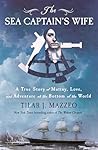
Review: The Sea Captain's Wife: A True Story of Mutiny, Love, and Adventure at the Bottom of the World

The Sea Captain's Wife: A True Story of Mutiny, Love, and Adventure at the Bottom of the World The Sea Captain's Wife: A True Story of Mutiny, Love, and Adventure at the Bottom of the World by Tilar J. Mazzeo
My rating: 3 of 5 stars

3.5 stars

I received this book for free, this does not affect my opinion of the book or the content of my review 

She is the captain’s wife and just nineteen: Mary Ann. 

The Sea Captain's Wife was an account of how Mary Ann Patten became the first recorded woman captain of a merchant ship. Footnotes abounding, the author clearly did through research, which some readers will appreciate and others might find their eyes glazing over at times as I felt some tangents tied-in and others a little spun-off. While we start off at the moment Mary Ann's husband, Joshua, collapses from illness on their sea voyage and she's about to have to take over, the story quickly goes back to give historical context to how these two have ended up where they are. 

We are on a dangerous journey. A journey in which wealthy shipowners pit young men against each other with the promise of riches, urging them on to reckless dangers, in the name of another man’s lucre. The year is 1856. 

The beginning delves into Mary Ann and Joshua's family trees, you'll get a lot of geographical, economical, and genealogy background to help give a good idea who these two might be and why they made the decisions they did. As Mary Ann and Joshua had ties in Maine and lived in Boston, the Old North Church and other landmarks make numerous appearances, helping to set the reader in the time and place. There's also delving into the US's economical context at the time, highlighting how important shipping was, discussion on how Matthew Maury changed the game, and the way the business was set-up, with backers, companies, and so forth, and how important having good captains were. The describing captains as the “rock stars and professional athletes” of the time, along with salaries put into today's context, along with going through a ship crew's hierarchy and politics helped to lay-out the atmosphere for when the story gets to the moment readers are probably looking for, when Mary Ann becomes captain. 

Never before had any woman been acclaimed captain of a merchant clipper. 

Around the halfway mark is when all the lead up pays off and we get Joshua becoming too ill and Mary Ann having to navigate Drake's Passage and fend off a mutiny from a disgruntled crew member. I was a little disappointed with what I was, mostly, reading the book for was such a little part of the overall story. Her time in charge was, factually a short time in her overall life story, but I felt somewhat bereft as that was what I went into this for. The journey she faced after, getting back to Boston, caring for Joshua, having a baby, and trying to secure enough funds to live on, all while having her legend grow through newspapers, was engrossing in a sedate way and sad in how the lack of medical advances at the time had her story ending far too soon. 

For nonfiction, this had a fair amount of conjecture in it, which is explained/discussed in the author's notes in the end; how documents/records weren't kept for middle-class, everyday people. I agree that these people's stories should still be told but when emotions and thoughts are more readily inferred, I get a little uneasy. This was a good read for looking at a moment in time where sea faring could make or break individuals and the US, you'll get a good look at two American families who Mary Ann and Joshua tied together and how Mary Ann gained the knowledge to be able to captain the clipper Neptune's Car and become the first recorded woman merchant captain.

Sunday, July 27, 2025

Review: A Flower Traveled in My Blood: The Incredible True Story of the Grandmothers Who Fought to Find a Stolen Generation of Children

A Flower Traveled in My Blood: The Incredible True Story of the Grandmothers Who Fought to Find a Stolen Generation of Children A Flower Traveled in My Blood: The Incredible True Story of the Grandmothers Who Fought to Find a Stolen Generation of Children by Haley Cohen Gilliland
My rating: 4 of 5 stars

I received this book for free, this does not affect my opinion of the book or the content of my review 

A group of fierce grandmothers formed the Abuelas de Plaza de Mayo, dedicated to finding the stolen infants and seeking justice from a nation that betrayed them. 

A Flower Traveled in my Blood is an historical and emotional account of how the dictatorships, juntas, and upheavals in 1970s Argentina lead to forty years of searching for disappeared family members and fighting for justice. Written by journalist Haley Cohen Gilliland, it takes into account historical documents and first hand accounting from people who lived it. When I started this, I thought the focus was going on to be solely on the group Abuelas de Plaza de Mayo, but so that the reader gets a full understanding, Gilliland gives a full accounting and goes through the timeline of political events that lead to the forming of the Abuelas and the political atmosphere affecting their lives. It gives a fuller picture but also felt too scattered at times, it seemed like the story didn't know what it wanted to focus on. If you know nothing of the history of Argentina at this time, you might appreciate the context but others not looking for a full complete history lesson and more of a singular focus on the Abuelas, may get lost in all the historical players. 

The armed men who now roved the city as agents of the dictatorship were at once secretive— driving cars without license plates and obscuring their faces with women’s stockings— and brazen, abducting people off the street in broad daylight. 

While the story lays out the historical events and details about the Abuelas, it also has a solid backbone taking the reader through the timeline by following the Roisinblit family. Rosa was one of the founders of the Abuelas and came into it by searching for her daughter, Patricia. Patricia was earlier on politically active with her partner, Jose, but then had a daughter and was pregnant again, trying to stay off the radar. She was taken, her young daughter left, Rosa ends up taking care of her, and thus begins Rosa's search for her. With the government unstable, and others searching for the desaparecidos, we see how out of necessity Rosa and the other older women, join together to try and find their children. So, while we travel through the timeline of historical events starting in the 1970s, El Proceso (National Reorganization Process), Argentine Anticommunist Alliance, Noche de los Lápices (Night of the Pencils), Operation Condor, etc, we also follow the forming of the Abuelas and some of Patricia's, her children, and Rosa's journey. 

While the armed forces claimed to be targeting “terrorists,” they employed a conveniently loose definition of what that meant. In their crosshairs were not only militants but those on the further peripheries of the left. Students. Artists. Journalists. Union leaders. Lawyers who defended unions. Musicians. Poets. Priests who ministered to the poor. Nuns who helped desperate families looking for their missing relatives. In the eyes of the dictatorship, they were all “subversives.” 

The small beginning of the Abuelas to the organization it grew to was emotional and inspiring. There were the bonds of grief, the infighting from growing pains, the danger from the government and their infiltrators, and their sheer determination to never forget their children. When they start to get help from outside organizations, like the Delegación de Asociaciones Israelitas Argentinas, CLAMOR (Committee for the Defense of Human Rights in the Countries of the Southern Cone), and eventually an American scientist Mary-Claire King, you'll start to feel the power and achievement of collective power. 

The junta had tried to make thousands of people disappear, and to erase the identities of their children. But mtDNA was like an indelible ID tag that every mother seals in her children’s cells. What the Abuelas needed to find their grandchildren was already within them. In their blood, just as in Gelman’s poem, traveled a hardy flower, the mitochondrial DNA that contained the story of every mother that had come before them, and every child they had borne—no matter where in the world they had been taken. 

The later second half focused on the search for the grandchildren of the missing Abuela's children and how DNA research was the hope they were looking for. An important aspect I liked being touched on was how this didn't just devastate the Abuela's lives but the easy answer of finding DNA matches wasn't easy at all. The grandchildren ranks were full of children who had no idea about their origins, sometimes not wanting to know and others feeling torn up about feeling like they were betraying their adoptive parents by getting to know their biological families. Rosa's family thread continues as they find Patricia's child she was pregnant with when she was taken and he talks about how learning his true origins shredded his life. Injustices like this never happen in a vacuum and I'm glad the generational reverberations were shown. 

“It was an honor to scream when everybody else held silence,” 

There were at times I thought the organization of the storytelling felt too scattered but if you don't mind a pretty thorough relaying of the political historical events of the time, the eye-opening and emotional journey is worth it. The Roisinblit family doesn't get a full happy ending, no such thing exists in circumstances like this, but you'll learn some of what happened to Patricia. As the story takes us all the way up to present day, you'll learn about some of the court cases trying to get justice for these families forty years later, how the ESMA (Escuela de Mecánica de la Armada) prison is now a museum to try and tell some of the desaparecidos stories and serve as a warning when eyes turn away, and how many grandchildren have been found and how many are still missing. It's a time in history we shouldn't look away from and hopefully, learn from, and this covered the emotional toll of living through such time and standing up to it pretty well.

Tuesday, February 4, 2025

Review: Lochs & Legends

Lochs & Legends Lochs & Legends by Andy the Highlander
My rating: 5 of 5 stars

I received this book for free, this does not affect my opinion of the book or the content of my review 

You'll find her in the Highlands, among the heather and the stone, 
You'll find her in the Highlands, where her heart has found it's home. 

A love letter, history and geography lesson, and tale telling, Lochs and Legends was a fun trip through parts of Scotland travel guide. 

Our travel guide, Andy the Highlander (may recognize him as a supporting actor from the Outlander tv show), obviously loves his homeland and it comes through each tale and description of the land. Starting off in Fife, we get tales of a haunted palace, witch trials, and a 500 year old Inn that travelers could visit. The guide then journeys through Edinburgh, Perthshire, Gateway to Highlands, Stirlingshire (The Kelpies and Falkirk Wheel may be known to many), Cairngorn, Inverness, Outer Hebrides, Isle of Skye, Western Highlands, Argyll, Clydeside, and Glasgow, among others. 

Each stop highlights Scottish heritage sights tourists might want to see, on the well trodden path and off-beaten. From nature walks, sharks, castles, book shops, and pubs, there's plenty here to entice you to make the trip. Andy's knowledge and gift for gab, with help written from Lily Hurd, made this an entertaining read, whether it was relaying of historical events, people, and places, or more whimsical with fairy and ghost folklore and stories. As an American, the sheer amount of historical places fascinated. The ending also gave us a Scottish Culture section where recipes and music could be found and a Resources section to give starting places if planning a trip. 
Definitely recommend if wanting to learn about Scotland, for going on a trip or just personal enjoyment. 

Let me tell you that I love you and I think about you all the time 
Caledonia you're calling me and now I'm going home. 
If I should become a stranger you know that it would make me more than sad 
Caledonia's been everything I've ever had.

Monday, November 25, 2024

Review: Cabinet of Curiosities: A Historical Tour of the Unbelievable, the Unsettling, and the Bizarre

Cabinet of Curiosities: A Historical Tour of the Unbelievable, the Unsettling, and the Bizarre Cabinet of Curiosities: A Historical Tour of the Unbelievable, the Unsettling, and the Bizarre by Aaron Mahnke
My rating: 4 of 5 stars

I received this book for free, this does not affect my opinion of the book or the content of my review 

A written British Museum Enlightenment Room, Cabinet of Curiosities would make a great addition to any home library or a fun coffee table book for guests. Numerous little short stories, under such categories as American History, Coincidences, Fantastic Beasts, Bizarre Events, More Than Human, Origin Stories, etc., gave delight and some gasps. Remember when Tennessee was Franklin, a nuke was dropped on a South Carolina playhouse, and a Napoleon officer's idea eventually lead to Braille? You'll learn about all that and more. 

Along with some learned knowledge tidbits, there were also some not so sure I should 100% believe all this, historical anecdotes that you're just going to have to take words for it, like a plumber who encountered ancient Romans. It was all in good fun though and I really enjoyed some of those, it will have you shining on trivia nights, stories, like how Wes Craven might have gotten the idea for Freddy Kruger and Locusta, who might have been one of the earliest hit-women. 

If you're like me, these quick short stories won't be enough and I loved how the back of the book had a Sources section that had me furthering my reading on some topics and going down rabbit holes. Fun and interesting with some more well known and more obscure tidbits.

Sunday, October 13, 2024

Review: Blackness Is a Gift I Can Give Her: On Race, Community, and Black Women in Hockey

Blackness Is a Gift I Can Give Her: On Race, Community, and Black Women in Hockey Blackness Is a Gift I Can Give Her: On Race, Community, and Black Women in Hockey by R. Renee Hess
My rating: 4 of 5 stars

I received this book for free, this does not affect my opinion of the book or the content of my review 

It isn’t easy being the first— the first Black woman to win gold, to run a hockey school, to be a professional hockey scout, to start a hockey non-profit that values Black women above all else. “Firsts” need the support and care of our communities. But by creating safe spaces where others can be vulnerable and honest, we give ourselves that same gift—and that’s a beautiful thing to behold. 

With a title that I expected to deliver more of a scholarly tone, footnotes and the like (there is a Works Cited), Blackness Is a Gift I Can Give Her: On Race, Community, and Black Women in Hockey instead was a conversational piece about the author's fandom, experience, work, insight, and hope for inclusivity in the world of hockey. The beginning lays out how they came to be a fan of the sport and then how isolating it could be at times being a Black and queer person in that fandom. This had the author creating Black Girl Hockey Club, sending them down a road of creating space, connections, and opportunity for others to not feel so isolated. 

Be a bridge to something better, and take care of the bridges in your own communities. 

A lot of this highlighted the people working to make a difference, such as Kim Davis, Dr. Szto, Shireen Ahmed, Sarah Nurse, Erica Ayala, Blake Bolden, and Jashvina Shah, along with organizations, BGHC, Carnegie Initiative, Get Uncomfortable Campaign, and Hockey is for Everyone. Important names to get out there, as the book discusses, resources, information, and knowledge give people a way to reach out and connect. Relaying this information shows the work being done and how many kids and families want to give hockey a try but have no idea where to start. There's a lot of talk about community, whether in person or online but always addressing the importance of building it and relaying how the author has done it, helping with suggesting how to do it.

I am leery of anyone who would rather be blissfully ignorant than painfully aware. 

The heart of the book was the relaying and sharing of experiences of players, parents, kids, and people that have a love of the game that the author interviewed, Joel Ward's thoughts and feelings about his mom will connect and hit hard with many. There's discussion of how colourism and ignoring intersectionality work to undermine efforts for inclusivity and an ending chapter that speaks on how insidious white feminism is to efforts for equality and equity for all. 

Black hockey players are few and far between at all levels of hockey, which means that equitable communities must be built with intentionality. Parents of Black children will seek these spaces out, but first they must exist. 

The evolution of women's hockey is also discussed and how behind the NHL is compared to the NBA on reaching out. The burst of popularity of the WNBA in the last year shows that once afforded attention, money, effort, and time, women's sports can more than hold their own. The spending power companies let sexism and racism leave on the table never ceases to amaze me. I thought the first half of this was laid out perfectly but the latter second half before it wrapped up had moments of not held together as tightly, causing it to feel a little sluggish. Anyone can get something out of reading this, if you're Black, a sense of community, if you're white, a shake up to see outside of yourself, and if you're a hockey fan, you'll feel the excitement and love of the game and see all the ways the experience for all needs to and can improve.

Tuesday, April 30, 2024

Review: The Swans of Harlem: Five Black Ballerinas, Fifty Years of Sisterhood, and Their Reclamation of a Groundbreaking History

The Swans of Harlem: Five Black Ballerinas, Fifty Years of Sisterhood, and Their Reclamation of a Groundbreaking History The Swans of Harlem: Five Black Ballerinas, Fifty Years of Sisterhood, and Their Reclamation of a Groundbreaking History by Karen Valby
My rating: 5 of 5 stars

I received this book for free, this does not affect my opinion of the book or the content of my review 

“But what about Grandma?” 

The Swans of Harlem was a reclaiming of historical Blackness in ballet as told through five women who were at the forefront. Lydia Abarca, Sheila Rohan, Gayle McKinney-Griffith, Karlya Shelton-Benjamin, and Marcia Sells were part of the founding core at Arthur Mitchell's Dance Theatre of Harlem. If you're a fan of ballet, then you've probably heard of Arthur Mitchell, a dancer himself who broke color barriers and after Martin Luther King Jr's assassination, decides to start and build DTH, with a board including Cicely Tyson, Brock Peters, George Balanchine, Lincoln Kirstein, and Charles De Rose. Such powerful figures helped to contribute to DTH's success, along with philanthropists' donations, that the company was in constant need of, but the heart of the success lies in the dancers who sacrificed, worked, and understood the importance of what their mission was. Told in three acts, the book successfully tells their stories and brings you back to a world of the Civil Rights Movement, it's lingering effects, and the reclaiming of history. 

He would build a ballet school in Harlem, the neighborhood that had raised him up. And because children deserve role models who show them what is possible, he would simultaneously establish the first permanent Black professional ballet company. 
Art is activism. Let the gorgeous lines of his dancers’ bodies serve as fists in the air. 

The first Act was all about the building of the DTH and how each of the five women entered Arthur Mitchell's world. I enjoyed how we really got to not only know these women's individual stories but a part of their families. One thing is clear while reading this, rarely does anyone do it alone and the support these women's families gave them, made all the difference; it's not just the story of these women but generations. I also enjoyed how, while Mr. Mitchell was celebrated for his strength and perseverance, he wasn't canonized, he was a living breathing man who's personality was formed in a different era and had all the highs and lows of it (colorism is discussed). It added to the carrying over and intertwining of generational butterfly effects. 

“We all understood this to be a higher calling,” says McKinney-Griffith. “Suddenly that step on pointe made a difference. We were a group of brown people, of all different shades from different cities and countries. For those of us who’d felt for so long adrift and like a lonely standard bearer— to look around and feel the power of numbers was just extraordinary. We were en masse, so we were protected. Can you imagine the energy that freed up? The freedom to just focus on our craft. We never had to justify to each other our right to ballet.” 

The second Act, focused more on the five women's individual stories and when they finally left DTH to move on and explore other avenues in life. Intermingled with the individual women's stories were chapters that also continued the timeline of what was happening at DTH. This timeline see-sawing tripped me up as a reader a few times and I thought hurt the flow of the book. 

When the evening’s moderator, WBUR culture and arts reporter Cristela Guerra, asks the members of the Legacy Council to discuss the importance of telling their stories now at this moment in history, McKinney-Griffith responds with terrific gravity. “Because we all have a voice,” she says, looking intently around the room. “And we all need to project that out into the world. Otherwise someone else is going to write our history. Or not.” 

Act three and the conclusion of the book brought the eventual closing of Dance Theatre of Harlem (due to lack of funds) but the creation of the 152nd Street Black Ballet Legacy Council. After seeing Misty Copeland hailed as the first Black ballerina (Copeland often works to praise those that came before her), erasing all of DTH's successes, which are accounted in the book, had these five women wanting to reclaim their spot in history, along with the many others that worked to make DTH a success (there's a touching moment where the women talk about the men of the company and how hard the AIDs crisis in the '80s and '90s hit them). Through their work with the Council, new names and trailblazers are being rediscovered and their history brought to light and preserved. Even if you're not a fan of ballet (there's terms used that assume you have at least a rudimentary understanding of the world) this was a great cultural and historical door into a moment in time that helped build and feed into the next generation of Black dancers. 

He wasn’t a Black man who dared to dance ballet. He was a dancer who dared ballet to see and celebrate his Blackness.

Monday, July 3, 2023

Review: Buffalo Girl

Buffalo Girl Buffalo Girl by Jessica Q. Stark
My rating: 4 of 5 stars

I received this book for free, this does not affect my opinion of the book or the content of my review 

When I began isn't clear, but isn't it obvious that                          we always had a knack 
for stories about little girls in danger? 

Buffalo Girl was the exploring and working through emotions and traumas caused by sexism, racism, war, losing cultural connections, and a mother and daughter relationship in poetic prose. The book was divided into three sections that dealt with the effects of relationships, mother and daughter, mother and father, and outside influences, background on mother's lived experience, and finally the jarring experience of leaving Vietnam and living in America. 

Let's find a way out of here 
let's take apart the woods 

While the prose was poetry, there was also a telling of story through the lens of the fairy tale Little Red Riding Hood. The author draws from the lesson of little girls needing to be wary of wolves and applied it to the dangers her mother faced in Vietnam. While the book mainly deals with the lived experiences of the author and her mother, there was also some historical cultural tie-ins with mentions of the Trung Sisters, Trần Lệ Xuân, and Triệu Thị Trinh (Buffalo Girl), relating to the shared experience of these women throughout the times, the type of violence women experience. 

If she couldn't become a new dawn, she'd settle for a buffalo. 

Throughout the book there was also collage pictures, made up of the author's mother's old photographs taken, the author's photos of plants and flowers, and drawings of Little Red Riding Hood. I thought the applying of the Little Red fairy tale was an interesting way to explore and comment on societal acceptance and ignoring of violence woman are subjected to and how indoctrination works. My favorite poem was The Furies and a few poem lines about how they were living in America after the Vietnam War and how her mother saw men who would be considered war criminals in Vietnam, being lauded and celebrated as heroes. The anger and pain came through at points, for what the mother lived through and how it caused the author to lose important cultural ties but also the endurance and strength of the author, her mother (her sense of humor), and women in general. Overall, this was an effective artistic expression of loss, pain, anger but also strength and endurance.

Tuesday, May 2, 2023

Review: The Thorns Remain

The Thorns Remain The Thorns Remain by J.J.A. Harwood
My rating: 4 of 5 stars

3.5 stars 

I received this book for free, this does not affect my opinion of the book or the content of my review. 

The figure extended a graceful hand. 'Join the dance.' 

It's 1919 and while the War has ended, the danger and threat of the Spanish Flu still lingers. Moira Jean's little village in Scotland keeps dwindling as boys and men were lost to the war and others to the lure of more opportunities in the cities. Moira Jean and her six friends toil as tenets to a rich family that hasn't even visited their estate in years and always with the threat of eviction hovering. When they decide to let off some steam in the woods, drinking and carrying on, a new danger reveals itself. Now Moira Jean must deal against The Dreamer, trying to get her friends back and keep herself and the rest of the village safe. 

'Careful, Moira Jean. You are safe if you are ignorant. Do not stray too close to that which you do not understand.' 

The Thorns Remains was a magical realism and fantasy story that brought back all the reasons why people line their windows and doorways with iron. I loved how all the different kinds of fae folk were added in, kelpie, brownies, changelings, glaistig, etc and The Lord of Land Under the Hill, a.ka. The Dreamer, didn't sparkle so much as be painful to look upon because of his beauty that bordered on and could shift to grotesque. 

Dying from the flu as he was trying to make his way back home, Angus, Moira Jean's fiance, has her weighed down with grief and wearing his Victory Medal. A medal that has just enough iron in it to keep her from completely falling under The Dreamer's spell when he starts the music up, after he catches her and her friends in the woods. Moira Jean sees the creatures for what they are, antlers coming out of eye sockets, vines coming out of mouths, and refuses to keep dancing and follow everyone to The Dreamer's halls. She wakes up in the morning at home with an awful hangover and no one in the village missing the six friends as they're under a spell thinking their kids are just somewhere else. This leaves Moira Jean to return to the woods and make deals with The Dreamer to get her friends back. 

'Of course we are equals,' he said, his voice low, 'but that does not make you any less mine.' 

The Dreamer is just intrigued enough with Moira Jean to bargain with her and the story starts to get a Tam Lin essence to it, until Moira Jean reads the actual story to The Dreamer and then we spin a different direction. Moira Jean bargains one of her letters from Angus to The Dreamer for one of her friend's return and we see The Dreamer be fascinated with human emotion. The story then has The Dreamer acting as if he is starting to feel love for Moira Jean and this could have easily spun into a romance but I loved the direction this took with instead having Moira Jean eventually recognizing all the ways The Dreamer had been manipulating her and how it was selfish, obsession, and controlling and not love The Dreamer was feeling for her. 

Brudonnock was alive with unseen things, and she could see them all. 

While I enjoyed how we got to know the townspeople and Moira Jean's relationship with her mother, so we could get a feel for the community Moira Jean was living in, this story was four hundred pages and a good chunk of her working, doing chores (so much laundry washing!) could have been edited out, it dragged the middle and beginning second half down so much. There is a deadline to the bargains Moira Jean is making with The Dreamer, Beltane, and that is six weeks away. Instead of a steady pace of her trying to come up with ways to get her friends back, the pace slows and feels meandering as she has to do chores. I don't think streamlining this would have cut out any feelings and instead would have vastly improved the pace and therefore story. 

She stepped into the Land Under the Hill. 

The latter second half speeds up as Moira Jean stands up to the The Dreamer and his warnings of a “tithe” and The Queen come to fruition. We get fascinating fantasy scenes in The Dreamer's world and danger from The Queen. This was told in five parts, no chapters, with a writing style that pulled me into the story and if Moira Jean had focused a little more on getting her friends back with less scenes showing her doing her chores, the return to fae being something to fear would have this a favorite read of the year, but I still did enjoy the places this went. 

He wanted her afraid, uncertain – it was how he'd always wanted her. But she had finished giving him what he wanted. 

The exploring of Moira Jean's grief, touching on how culture can be stripped from a people (Mrs. Iverach), economic opportunities, and how all love isn't good love were themes all explored in this magical realism world. The ending could easily be the last we see of Moira Jean but I can't help thinking that her last glance at the dock could lead to a sequel and I'd definitely sign up for more from the woman with iron in her soul.

Wednesday, March 29, 2023

Review: Love Stories

Love Stories Love Stories by Trent Dalton
My rating: 3 of 5 stars

I received this book for free, this does not affect my opinion of the book or the content of my review. 

There's a sign resting against my desk: 'Sentimental writer collecting love stories. Do you have one to share?' 

Feeling the need to reconnect after the Australian Covid lock-downs, Trent Dalton spent two months listening, connecting, and collecting stories from people of all walks of life about their thoughts on love. I went into this thinking that it would be more of an anthology like set-up, a bunch of individual short stories. While the short story outline was there, it was more of a relaying of the author's conversation with the person/people telling their love story. This worked to string and connect the stories but I thought it interjected the author too much into the speakers' stories, I wanted more from the teller's point-of-view. 

Some twenty-five thousand volunteers rolled up their sleeves, got themselves covered in mud and grit and grime, and earned themselves a name that will be whispered and toasted and remembered in the corners of riverside Brisbane bars and restaurants for decades to come: the Mud Army. 
She'd been a Brisbane resident for precisely three days, and she still decided to enlist. And she doesn't know how to explain it, but something changed inside her during that long, hard, beautiful weekend she spent in the hallowed ranks of the Mud Army. She had been feeling a little broken herself, a little bit broken like this city. 'Then I watched this place being rebuilt and it felt like I was being rebuilt with it,' she says. 'That's how it saved me. That's why I love this city.' 

Romantic love often sits center stage when discussing love connections and I enjoyed how familial, friendship, grief, wrong, not enough, inanimate, tough, ambiguous, dangerous, and with yourself love was all discussed, with romantic. The different dynamics, outcomes, and how it changed the person was clear from the conversations and did help to feel a connection to the people sharing their stories. There was a story that the author broke up into two parts, one in the beginning and then end, to give a kind of cliff-hanger and I thought it was a bit ill judged because of the alluding to possible violence, it gave, for me, an almost sensationalized feeling. 

The stories ran the gamut of emotional, funny, and sad, giving this a nice coffee table, decorative bookshelf placement for a random pick-up and indulge in one story at a time. There's a little more of the author in this than I had anticipated and I would have liked for the stories to have been less presented conversational but there were definitely nuggets of keep with you moments. My favorite came from a long-time married couple: 

Rosie smiles, understandingly, then sums her husband up in three words. 'Seamus is truth,' she says. 'Love is the privilege of being with someone long enough that you're gradually refining the truths that you tell each other. You feel safe enough to keep showing more and more of yourself to each other. To me, that's what love is. It's not the fireworks and the rainbows and the butterflies. We all keep pieces to ourselves. True love is showing up as yourself.' 
And now I know what love is: 

Love is exposing all the pieces.

Tuesday, February 7, 2023

Review: The Black Guy Dies First: Black Horror Cinema from Fodder to Oscar

The Black Guy Dies First: Black Horror Cinema from Fodder to Oscar The Black Guy Dies First: Black Horror Cinema from Fodder to Oscar by Robin R. Means Coleman
My rating: 5 of 5 stars

I received this book for free, this does not affect my opinion of the book or the content of my review. 

Black horror points a finger at evil because those who forget the past are doomed to repeat it, just like those who forget the rules of horror are just plain doomed. 

The Black Guy Dies First affectionately celebrated the horror genre by discussing, poking fun, and delving into Black acted and made horror movies, from a fan, social, and academic standpoint. The book takes readers through the historical atmosphere of horror movies, starting with Spider Baby's “Black Guy Dies First” template, to the 1960s/70s “Blaxploitation”, '80s slasher carnage, '90s/2000s hood and urban horror, and into the 2010s/current more nuanced and multifaceted Black characters and stories. Along with movie atmosphere, characterizations like “Sidekicks Who Survive” are discussed with titles and movie characters. 

As Dr. Coleman has previously wrote, Horror Noire: Blacks in American Horror Films from the 1890s to Present and Mr. Harris is the creator behind BlackHorrorMovies.com and the Shudder series Behind the Monsters, their love of the genre and knowledge was evident. I enjoyed the layout of informing, intersecting, and numerous movie titles given to support and give examples of what was being discussed and then the “breaks” in-between to entertain. The list of actors whose characters gave their lives for white people, rightly had Tony Todd at number one (Keith Diamond gets a very justified shout-out after Dr. Giggles did him wrong). 

Horror has a lengthy history of addressing newsworthy topics, from the nuclear fallout of Godzilla ( 1954 ) and Them! ( 1955 ) to the McCarthyism in Invasion of the Body Snatchers (1956), the gender roles in Rosemary’s Baby (1968) and The Stepford Wives (1975), the anti-war stance of Deathdream (1974), the eco-horror of Prophecy (1978), and the consumerism critique of Dawn of the Dead (1978) and The Stuff (1985). 

I've always felt that horror is one of the best genres to hold some of these discussions because of it's ability to explore and breakdown our individual, collective, and manufactured fears and how we work to overcome them. With data numbers given like, in an informal and soul-crushing survey of almost one thousand horror movies containing more than fifteen hundred appearances by Black characters, we found their mortality rate to be about 45%. and Hollywood Diversity Report from UCLA’s Division of Social Sciences, in 2019, only 5.5% of the directors and 5.6% of the writers of theatrical releases were Black, and it was only in the COVID-strapped, theatrically challenged anomaly that was 2020 that the percentage of Black directors (15.1%) and writers (13.5%) approached the actual national demographic (Blacks accounting for 13.4% of the U.S. population). Further, as of 2019, 91% of studio heads, 93% of senior executives, and 86 % of unit heads were White. it makes Ben from Night of the Living Dead and Get Out even more important. 

He is thus the literal ghost of racism coming back to haunt future generations. Although he sets his sights on Helen, anyone can feel his wrath, regardless of race, class, age, gender, or sexuality. We all suffer. Hate breeds hate, and violence breeds violence. The legend of conjuring him by saying his name eerily parallels current calls to say the names of the victims of racial violence. Like Candyman, they need to be remembered in order to retain their power. 

If you're a horror fan, this book feels like a must to add to your collection. The sheer amount of movies and some tv shows, Watchman and Lovecraft Country (unless I missed it, Ruth Negga's Tulip from Preacher was left out) listed makes it worth it. I enjoyed mentions of some of my favorites, Fallen, Demon Knight, His House, and The Purge collection and have written down quite a few that I now need to watch, The Devil Lives Here, The Vault, and The Inheritance. This book doesn't disparage the movies and characters but acknowledges, discusses, and pokes fun at the problematic elements of some of them, which is necessary when you love something but see that it can be improved. I had a fun and thoughtful time and yes, the authors give their Top Ten Horror movies list at the end for you to compare with your own. The last line of the acknowledgments at the end had me screeching (look, I watched the original Candyman by myself at age 11ish, I don't say things five times, like how I don't mess around looking into street grates) and then laughing, what a perfect way to end a book about horror.